Hormone replacement therapy HRT can profoundly improve the quality of life for individuals experiencing hormone imbalances. Many patients start HRT to relieve menopause symptoms, manage menopausal symptoms, or address other hormone imbalances affecting mood, energy levels, sleep, sex drive, and overall health. Understanding how long it takes hormone replacement therapy to work helps set realistic expectations and ensures better outcomes.
HRT is a treatment that restores balance in hormone levels, often involving estrogen, progesterone, or bioidentical hormones, depending on individual health conditions and medical history. Starting hormone therapy is not instantaneous, and the timeline for relief depends on symptom severity, treatment plan, dosage, and lifestyle factors.
Many patients benefit from Hormone Replacement Therapy (HRT) at MHA‑4‑Women to safely manage their symptoms and restore balance effectively.
Early Signs of Improvement: Just a Few Weeks
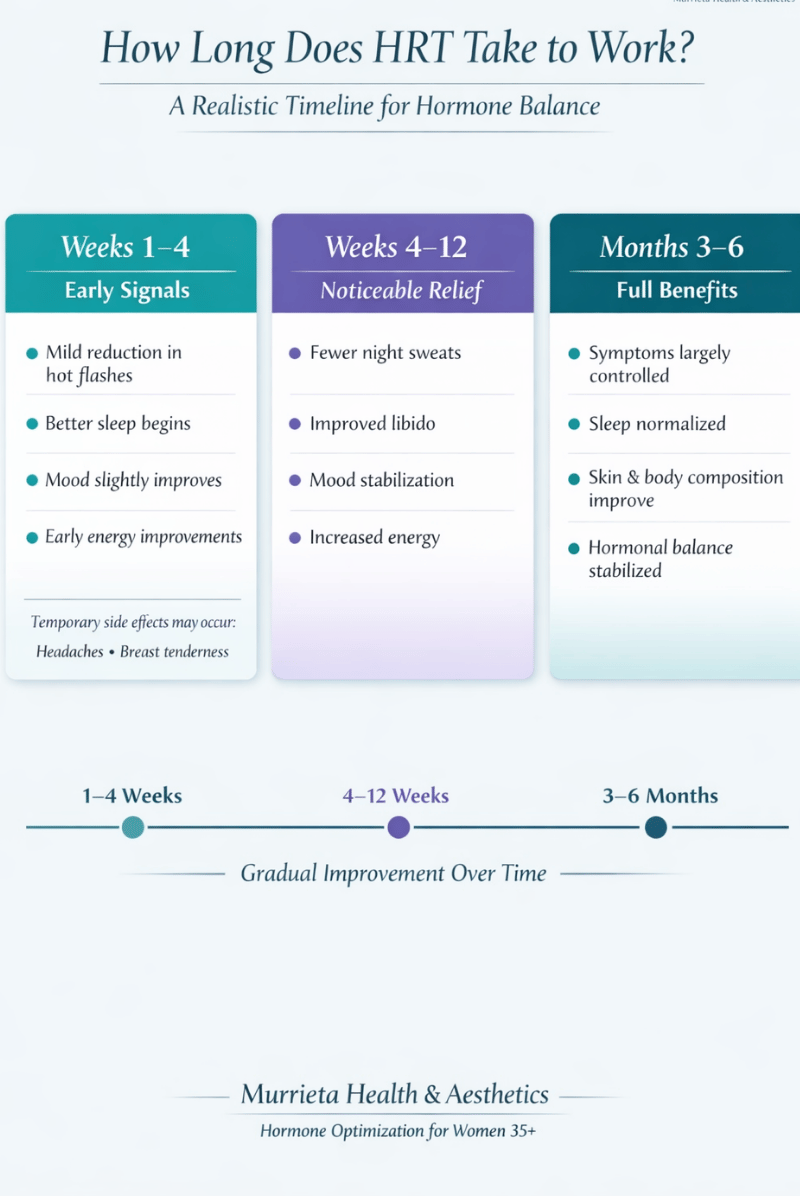
For most people, some effects of taking HRT are noticeable within just a few weeks. Relief from hot flashes and night sweats can begin early, and better sleep often follows soon after. Women may also experience reduced mood swings and improved mood, although these changes can be subtle at first.
Breast tenderness and mild headaches are common side effects in the initial weeks of starting HRT, especially when the body is adjusting to new hormone levels. Many healthcare professionals advise beginning with the lowest dose possible and gradually adjusting based on individual response. Starting low helps reduce potential side effects and allows doctors to determine the right dosage for full effectiveness.
Even within a few weeks, some patients notice that energy levels are slightly higher and vaginal dryness starts improving. These early improvements signal that the therapy is beginning to restore balance in the body, although full effects often take longer.
Four to Twelve Weeks: Meaningful Symptom Relief
Between four to twelve weeks after starting HRT, many patients experience noticeable relief from a wider range of symptoms. Hot flashes and night sweats tend to become less frequent and severe, and mood swings may stabilize further. Women often notice better sleep and increased sex drive.
Hormone replacement therapy at this stage begins to work steadily. Estrogen and progesterone start to affect tissues and body systems, and the body begins adjusting to the steady stream of hormones. Not everyone experiences improvement at the same rate, and symptom severity at the start HRT can affect how quickly results appear.
Doctors may make necessary adjustments to the treatment plan based on observed responses during this period. For example, doses may be slightly increased or delivery methods changed from pills to patches, gels, or injections to optimize absorption.
Three to Six Months: Full Effects Begin
By three to six months, the full effects of hormone replacement therapy are more apparent for many patients. Menopausal symptoms such as hot flashes, night sweats, and vaginal dryness are often well-controlled, and energy levels continue to improve. Mood swings are more stable, and many patients report a noticeable improvement in overall quality of life.
This stage is also when healthcare professionals may review hormone levels and health history to determine if further adjustments are needed. For some women, small tweaks to doses or switching between hormone replacement therapies can enhance results and reduce common side effects.
During this period, the body continues to adapt, and other symptoms such as skin changes, libido, and sleep quality improve steadily. The therapy is now supporting the body to restore balance in multiple systems, including reproductive, cardiovascular, and bone health.
Patients can also explore women’s hormone and wellness services to complement their HRT plan with personalized support and treatment plans.
Factors Affecting How Quickly HRT Works
Several factors influence how long it takes for hormone replacement therapy to work. Symptom severity, health conditions, and medical history all play important roles. Starting HRT early in menopause may produce faster relief compared to starting later.
Lifestyle factors such as maintaining a healthy lifestyle, including regular exercise, good nutrition, and stress management, can significantly affect outcomes. Consistent adherence to the prescribed dosage and therapy plan is essential, as missed doses or irregular administration can slow results.
The type of hormone replacement therapy used also matters. Bioidentical hormones, estrogen-only therapy, combined estrogen and progesterone therapy, and testosterone replacement therapy all work differently in the body. Delivery methods like pills, skin patches, gels, or injections influence how quickly hormone levels stabilize.
Doctors often recommend starting low and gradually adjusting doses to reduce potential side effects such as headaches, breast tenderness, or mood changes. By discussing your health history, symptoms, and treatment goals, your healthcare professional can design an HRT plan that balances benefits and minimizes risks.
When to Expect Full Relief
Most people experience partial relief of symptoms within a few weeks, meaningful improvement within one to three months, and the full benefits of hormone replacement therapy within three to six months. Some changes, like improved mood, better sleep, and reduced hot flashes, appear earlier, while others such as changes in skin, body composition, and sex drive may take longer.
It is important to have realistic expectations. HRT is not a one-size-fits-all therapy, and results vary depending on individual factors. Regular follow-ups with a doctor allow for adjustments in dosage, type of hormones, or delivery method to ensure the therapy continues to work effectively.
Optimizing Your HRT Plan
To maximize the benefits of hormone replacement therapy, patients should maintain a healthy lifestyle that includes proper nutrition, exercise, stress management, and sufficient sleep. Keeping track of symptoms and noting improvements or potential side effects can help doctors make necessary adjustments to the hrt plan.
Open communication with healthcare professionals is crucial when starting HRT. Questions about dosage, delivery methods, symptom changes, and potential side effects should be discussed to ensure the treatment plan aligns with your goals. Regular blood work and monitoring of hormone levels may be recommended to evaluate therapy effectiveness and make adjustments as needed.
Starting hormone therapy with the lowest dose appropriate for your symptoms allows the body to adjust and helps minimize common side effects such as breast tenderness, headaches, or mood swings. Gradual increases or modifications to your therapy plan can lead to a more steady stream of hormones in the body and better overall results.
What to Do If Symptoms Persist
Not everyone responds to HRT at the same pace. If symptoms such as hot flashes, night sweats, vaginal dryness, or mood swings persist after three to six months, it may indicate the need for adjustments. Doctors can review the therapy, consider alternative hormone replacement options, and ensure that other health conditions are not affecting outcomes.
Patients should discuss any concerns about symptom severity, side effects, or progress with their healthcare professional. Early intervention and necessary adjustments often restore balance and optimize the effectiveness of the treatment.
Key Takeaways
Hormone replacement therapy is a valuable option for managing hormone imbalances and relieving menopause symptoms. Some relief may occur within just a few weeks, but full effects usually take three to six months. Symptom severity, health conditions, delivery method, dosage, and lifestyle factors influence how quickly the therapy works.
Starting low, adhering to your HRT plan, maintaining a healthy lifestyle, tracking symptoms, and discussing progress with a doctor are all critical for success. By understanding what to expect and making informed decisions about treatment plans, patients can restore balance, improve quality of life, and experience the full benefits of hormone replacement therapy.